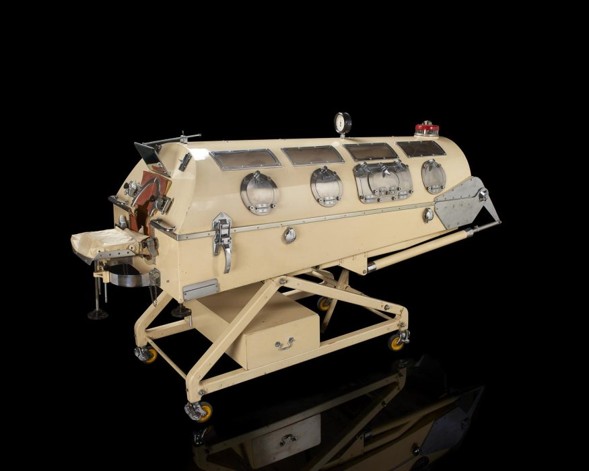
The iron lung is one of the objects most closely associated with polio. This large tank or cabinet respirator enclosed the whole body and mechanically assisted breathing for those with respiratory paralysis. For some, use extended beyond acute illness and rehabilitation, and they spent the remainder of their lives inside these devices. As the newsletter of the British Polio Fellowship, The Bulletin (Jan 1973, p.1) put it, it was a ‘lifesaving machine, paradoxically shaped like a coffin’.
The body
Iron lungs were used in cases of respiratory paralysis, when poliovirus had impacted the diaphragm muscles to the extent that patients were unable to breathe sufficiently on their own. Often, patients reported feeling very tired, weak and delirious before being put inside the respirator, which would have been due to acute illness and oxygen deprivation. Many were also very young, due to the propensity of polio to impact infants and young children (see Figure 2).
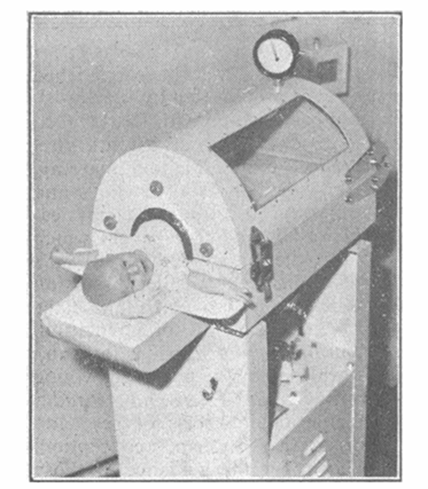
Figure 2: An infant inside a specialised respirator. British Medical Journal, 1959, p.98
Cabinet
The patient’s whole body (except their head) was lain horizontally and enclosed in a ‘coffin-like’ cabinet made from steel or plywood. This restricted movement and created an environment of absolute dependency. Being enclosed in a small space was often scary for patients and could lead to lifelong embodied memories and experiences of claustrophobia, including for those who were very young when they used the device.
Bellows
The mechanical pump or ‘bellows’ at the back of the respirator were driven up and down by an electric motor at the selected respiration rate. Each time the bellows descended, it pumped air out of the cabinet, reducing the internal pressure. The pressure difference between the outside and inside of the lungs caused them to expand, meaning air entered the lungs, manually moving the patient’s diaphragm and allowing them to breathe.
This produced a rhythmic, mechanical sound, the ‘whoosh’ of the air in and out, which was both a comfort and disturbance to those contained inside and others on the ward. If there were power cuts, medical staff would have to pump the bellows manually.
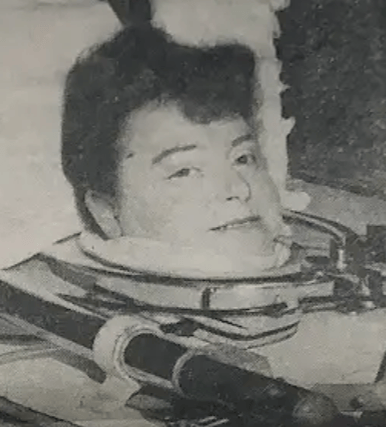
Rubber neck seal
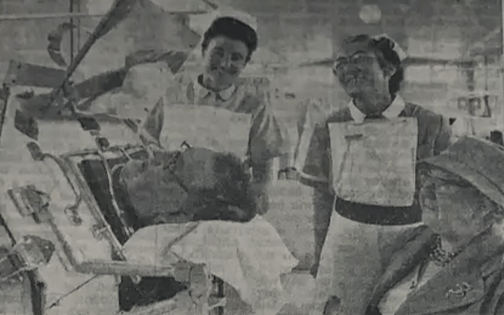
A seal around the neck was used to create the airtight chamber. This can be seen in more detail on Betty Witham, who had spent 25 years in the iron lung, as of 1973 (Figure 3). Interestingly, they chose to display the photograph rotated by ninety degrees so that she is upright.
Portholes
Portholes or openings on the side of the iron lung allowed medical care, without impacting the pressure of the device or having to take the patient out. Some, like the alligator model (pictured above), opened fully, meaning the bed did not have to slide in and out. Medical care was intensive and involved feeding, removing secretions from the lungs, tending to the bowels and bladder and preventing bedsores. This was the subject of much medical attention in contemporary medical journals (such as the British Medical Journal), far more than long term or other embodied impacts of polio.
Mirrors
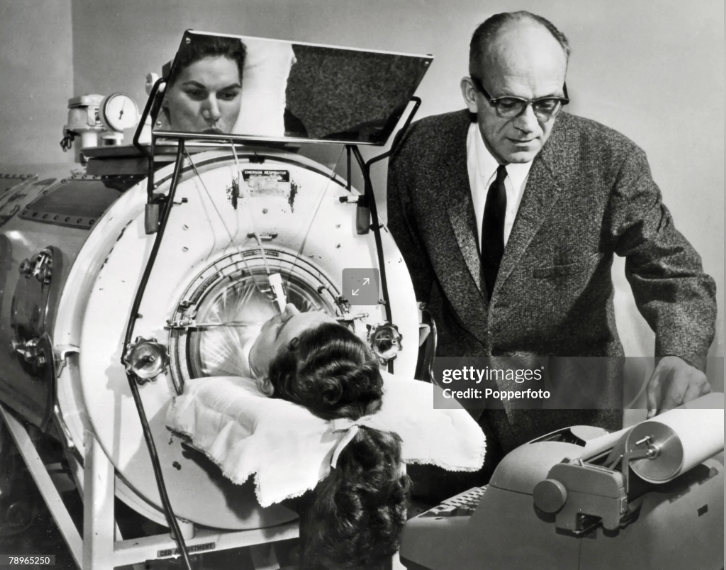
The iron lung produced almost total bodily dependence and restriction. As such, mirrors, placed above the head, were used to enable social awareness. However, patients often experienced boredom, fear and disorientation, despite doctors’ best efforts. Patients were unable to move, and had to simply lie there, totally dependent on medical staff and their families for all their needs and entertainment, a forced passivity which was often challenging and disheartening. With the help of others, they could do things like play chess, read, type (using a POSUM or Patient Operated Selector Mechanism (Figure 4)), and make radio shows (as described by Paul Bates in his autobiography Horizontal Man).
Leaving the iron lung
Often, these devices were used during acute rehabilitation, during which medical staff would slowly try to wean patients off the respirator. This occurred by opening it for increasingly extended periods of time to allow for independent breathing, which patients often found daunting and ‘scary’, or by using devices like rocking beds. Whilst patients often hated being in the iron lung, they also found that they hated being without the comfort and reassurance which it provided. As The Bulletin described it, Betty Witham saw ‘the tank’ as ‘both her jailer and her lifeline’ (March 1973, p.1).
Responauts
Throughout, I have been referring to patients, but those who continued to use these devices on a more permanent basis were termed ‘Reponauts’ in The Bulletin (a play on ‘astronaut’), indicating how this technology became a fundamental part of their lived experience and identity. In Britain, Responauts numbered 59 in 1964 and 70 in 1972, with the last polio disabled iron lung user in the US, Martha Ann Lillard, passing away in July 2026.
Respoanuts were pivotal for fundraising, advocacy and raising public awareness for the British Polio Fellowship, with personal stories which often involved extraordinary overcoming. They were also very vulnerable, with the British Polio Fellowship lobbying the Central Electricity Authority about the potentially fatal nature of power-cuts, seen in ‘Power Cuts Hit Respos’ (The Bulletin, March 1971, p.4). As The Bulletin put it in the article ’22 Years in an Iron Lung’, Dennis Atkins had ‘managed through sheer grit to inject tenacious spirit into his confined existence. Next time you think you’ve got problems, remember Dennis Atkins…’ (The Bulletin, March 1971, p.3).
Development
Pulmotors (artificial respirators which pump oxygen in and out of the lungs) were first used in 1900s Germany to treat victims of mining accidents. The first tank respirator, the Drinker Artificial Respirator (invented by a public health specialist in Harvard), was used from 1929 and consisted of a big metal box with bellows and a rubber neck seal (see Figure 6).
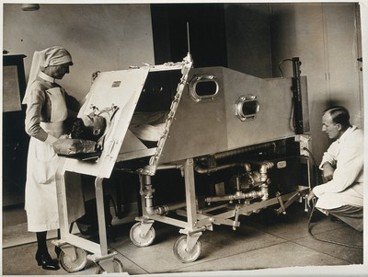
This was not the only design: the Emerson respirator, which was lighter and more efficient, was invented in 1931 and the Both Respirator was invented in Australia in 1937 due to the high cost of importing respirators from the US. This was made from plywood and was portable and relatively inexpensive, meaning patients could use them at home.
The Both Respirator was the most used form of iron lung in Britain during the polio epidemics, and Lord Nuffield (a prominent manufacturer and philanthropist) offered to supply one for free to every hospital in Britain and the Commonwealth which requested one in 1938. Over time, treatment moved towards positive pressure ventilation (delivering air directly to the lungs), but polio epidemics were pivotal in fuelling invention and innovation.
Conclusion
The iron lung blurred the line between technology and body, simultaneously producing bodily dependence, protection, restriction and care. Its symbolic significance and association with polio continues to resonate, long after its medical usage has waned.
Bibliography
Paul Bates, Horizontal Man, 1963.
Tony Gould, A Summer Plague – Polio and its Survivors, 1997.
The British Polio Fellowship, The Bulletin.
The British Medical Journal.
The Iron Lung | Science Museum.
Wellcome Collection.
Interviews conducted with polio disabled individuals between January and March 2026.
 poliothings
Leave a comment